
The town name, “Jasper” was selected from a passage from the Bible (Revelations 21:19) “and the foundations of the wall of the city were adorned with all manner of precious stones . . . the first foundation was of Jasper.”
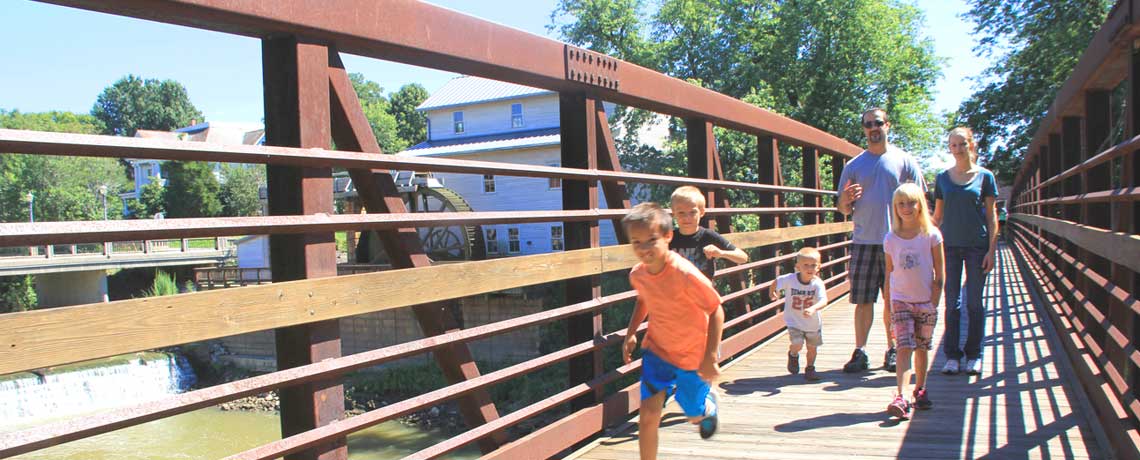
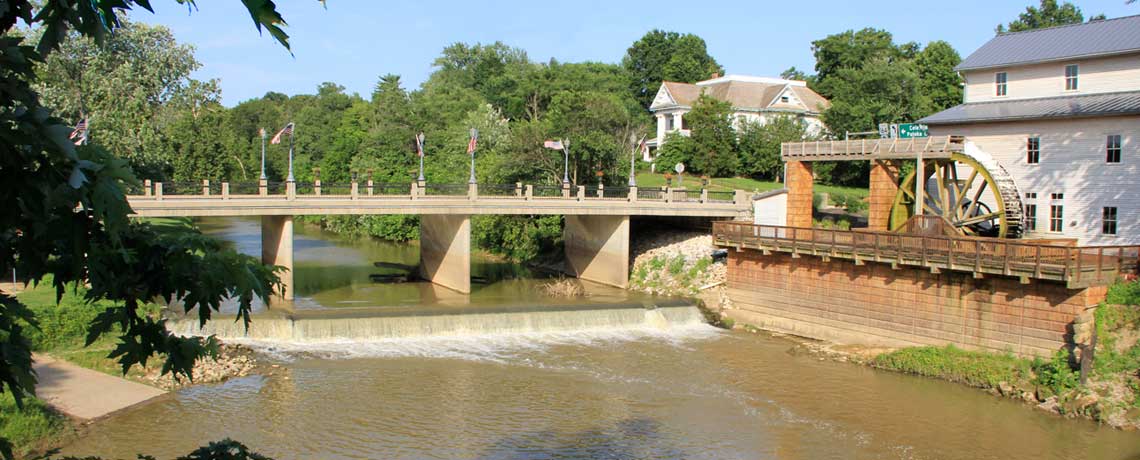
Jasper’s earliest local settlers were English-American Protestants mostly from the Kentucky-Tennessee area. The Patoka River, as an open waterway, was important to Jasper’s early settlement as transportation and water power for a grist mill.
The Enlow families came from Kentucky to Jasper; and, here they purchased a mill previously built by Andrew Evans. The Enlows had been neighbors with the Lincoln family in Kentucky. Mrs. Enlow was reported to be the midwife at Abraham Lincoln’s birth. The village was known as “Enlow’s Hill” until 1830 when the county seat was moved from Portersville. Eighty acres were donated by the Enlows for the town site.
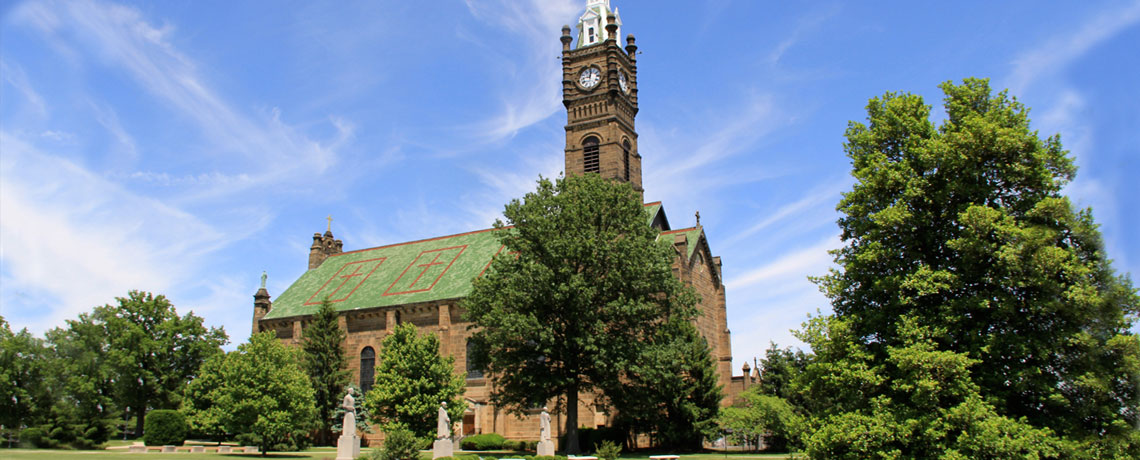
Before Fr. Joseph Kundek came in 1838, Jasper was a mission parish with only five Catholic families and a total population of about sixty people. The first log church was built at Sixth and Newton Streets, with services held once a month. Joseph Gramelspacher and Sophie Friedman were the first Catholic couple married in Jasper in the home of Dr. Aaron McCrillus, a Presbyterian. Dr. McCrillus spoke French and German and served as a translator between the French-speaking visiting priest and the German couple.
Fr. Kundek was the first resident Catholic Priest. He was a missionary born in Croatia. As he could speak German when he came to the Vincennes Diocese, Fr. Kundek was assigned to Jasper. Immediately he began to encourage German immigrants to settle in this parish. The local population began to grow, many coming from previous immigration to Cincinnati and from the Black Forest area and small German, Baden villages such as Pfaffenweiler, Reute, and from Bavaria. Many immigrated to the New World due to hard years of bad harvests hoping for a better life for them and their families.
The German population increased. Because of a cultural and language gap between the Germans and the English-speaking people, many of the earliest settlers moved on to other areas. Because of the increasing population, Fr. Kundek had the parishioners start clearing land, processing timber and other needed materials, and the first St. Joseph Church, built in brick, was started by 1840. All the work was done by the parishioners. Fr. Kundek also started many of the surrounding parishes and towns and was instrumental in founding St. Meinrad Abbey in 1854.
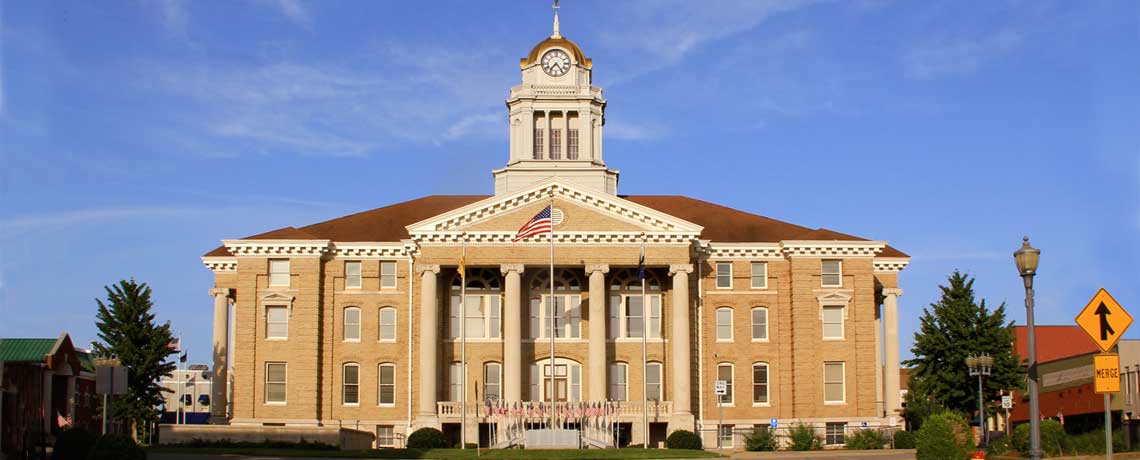
When the first log courthouse burned in 1839, Fr. Kundek undertook the responsibility of building a brick courthouse. He became a member of the Democratic Party (the first political party in Jasper was the Whig party) and persuaded many to become Democrats also. Fr. Kundek died on December 4, 1857, and is buried in St. Joseph Cemetery, which was also started in 1840.
Today we are reaping many of the rewards of the ethnic contributions made by our German ancestors. When they came, they brought stability, permanence, a hard work ethic, management skills, and excellent craftsmanship. Because many of Jasper and Dubois County roots were traced from Pfaffenweiler, (in the state of Baden-Wuerttemberg); Pfaffenweiler was chosen as Jasper’s sister city. Today’s local family names such as Bachman, Barth, Bauer, Beck, Conrad, Cramer, Daschle, Dick, Dilger, Eckerle, Eckert, Fry, Fuhrman, Gutgsell and others can also be found in the phone books at Pfaffenweiler. Pfaffenweiler is a small town in southern Germany, about five miles south of Freiburg nestled to the west of the foothills of the Black Forest. Approximately 40 miles north of Switzerland and 16 miles west of the Rhine River and France, the sister city is located in the wine-producing area of Germany with vineyards surrounding the entire town. Pfaffenweiler is also noted for its stonework.
Many German visitors come to Jasper to visit. Exchange students from the Pfaffenweiler area come for lengthy visits at Jasper homes and learn the American ways. In return, many Jasper residents visit Pfaffenweiler to locate ancestors and find their roots.